Tell us a little about your holiday — get free quotes from our travel experts.
✓ Free quotes · ✓ No spam · ✓ Response within 30 minutes
Prefer chat? Message us on WhatsApp
Sikkim has no working airport of its own, so from Mumbai you fly to Bagdogra in West Bengal and drive the rest. The non-stop takes about 2 hours 55 minutes and is followed by 123 to 126 km on NH10 to Gangtok, quoted at 4 to 5 hours, which makes a door-to-door day of roughly 11 to 14 hours. Return airfare runs about Rs 11,000 to Rs 24,000 per person depending on month, and a realistic all-in budget for a 6 to 8 day trip is Rs 30,000 to Rs 60,000 per person.
Flight, the road at the far end, and an hour of buffer. Add your own time to reach BOM and check in.
Land price is per person on twin sharing and excludes airfare. The estimated Mumbai total adds this city's return fare band.
| Package | Duration | Route | Hotels | Vehicle | Best for | Land price | Est. Mumbai total | |
|---|---|---|---|---|---|---|---|---|
| Queen of Hills - Darjeeling Tour | 3D / 2N | Gangtok | ₹3,999 | ₹14,999–₹27,999 | View → | |||
| 3N | 4D - The Magical Gangtok Tour | 4D / 3N | Gangtok | Budget / 3-Star Hotels | WagonR / Sedan / SUV(Innova/Xylo) | Families, Groups | ₹5,999 | ₹16,999–₹29,999 | View → |
| 4N | 5D - The Mystical Valleys of Sikkim Tour | 5D / 4N | Gangtok → Pelling | ₹7,999 | ₹18,999–₹31,999 | View → | |||
| Sikkim Darjeeling Combo - 6 Days | 6D / 5N | Darjeeling → Gangtok | ₹8,999 | ₹19,999–₹32,999 | View → | |||
| North Sikkim Lachung Tour 6 Days | 6D / 5N | Gangtok → Lachung → Gangtok | ₹10,999 | ₹21,999–₹34,999 | View → | |||
| Gurudongmar Lake - Yumthang Valley Expedition | 7D / 6N | Gangtok → Lachen → Gangtok | ₹12,999 | ₹23,999–₹36,999 | View → |
Estimated total = land price + ₹11,000–₹24,000 return airfare from Mumbai. It excludes lunches, dinners, entry tickets and personal spending. Indicative, not a quote.
Our pick for each kind of trip, from the packages we currently operate.
Balanced pacing and a lower-altitude base, with fewer long transfer days than a North Sikkim run.
See detailed itinerary — ₹7,999 →Relaxed itinerary, scenic stays and private transfers rather than a pre-dawn convoy.
See detailed itinerary — ₹23,999 →The essential circuit without overloading a first trip — Gangtok, Tsomgo and the monasteries.
See detailed itinerary — ₹5,999 →Prioritises Yumthang and Gurudongmar, with the acclimatisation nights those altitudes need.
See detailed itinerary — ₹10,999 →Built for limited leave — Gangtok and Tsomgo only, no North Sikkim.
See detailed itinerary — ₹5,999 →What you actually spend, by comfort level. Everything except the airfare row is the same wherever you fly from.
| Cost | Budget | Mid-range | Premium |
|---|---|---|---|
| Hotel, per night (twin sharing) | ₹800-1,500 | ₹2,500-5,000 | ₹6,000-12,000 |
| Meals, per person per day | ₹500-800 | ₹1,200-2,000 | ₹2,500-4,500 |
| Transport, per day | ₹500-1,000 | ₹2,500-4,000 | ₹4,000-6,000 |
| Sightseeing and permits, per day | ₹300-600 | ₹700-1,200 | ₹1,500-2,500 |
| Return airfare from Mumbai | ₹11,000–₹24,000 per person, booked three to six weeks ahead | ||
| All-in, per person | ₹30,000–₹60,000 for a 6–8 day trip | ||
How the total is worked out: nights × hotel + days × (meals + transport + sightseeing) + return airfare from Mumbai. Package prices quoted elsewhere on this page are land-only and do not include the airfare row. Budget assumes shared cabs; mid-range and premium assume a private vehicle for the whole trip. Inner Line Permit runs Rs 250-750; the Nathula supplement is about Rs 400-500 per person and Zero Point is charged per vehicle, not per head. Cost bands cross-checked against Dark Green Adventures — Sikkim trip cost breakdown and Bajaj Finserv Markets — Sikkim trip cost guide , 2026-08.
Fares are return, per person, booked three to six weeks ahead.
Five bases, and what each one is actually for. Nights shown are what most itineraries from Mumbai allocate.
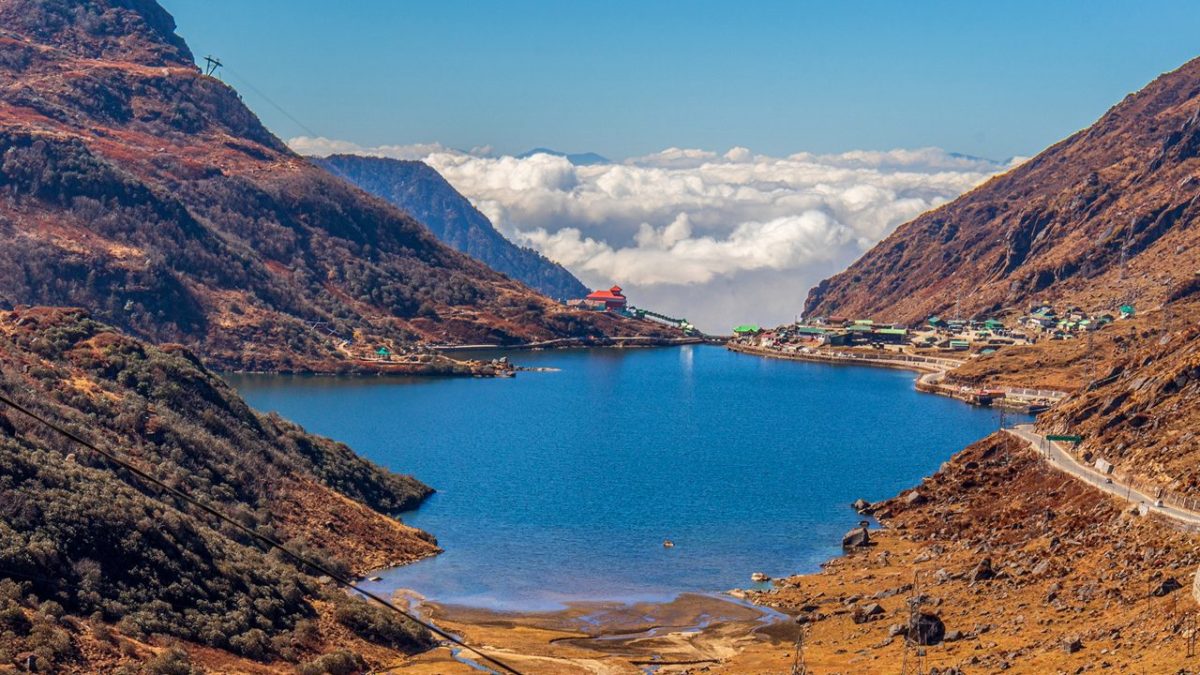
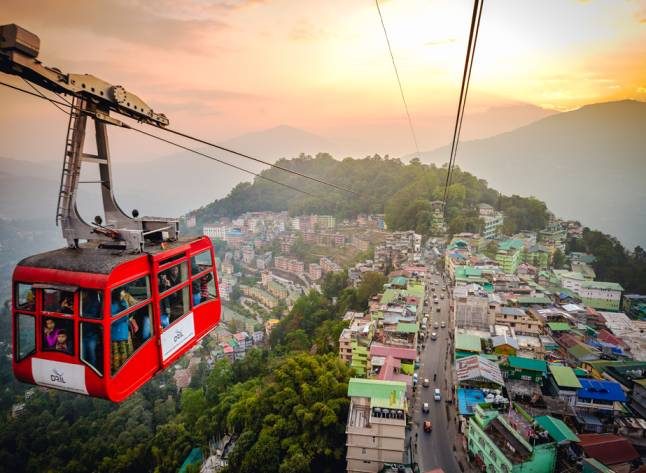
For: Tsomgo Lake, Baba Mandir and Nathula on the old Silk Route. The default base and the acclimatisation stop. Nathula needs an Inner Line Permit, is closed Mondays and Tuesdays, and is off-limits to foreign nationals.
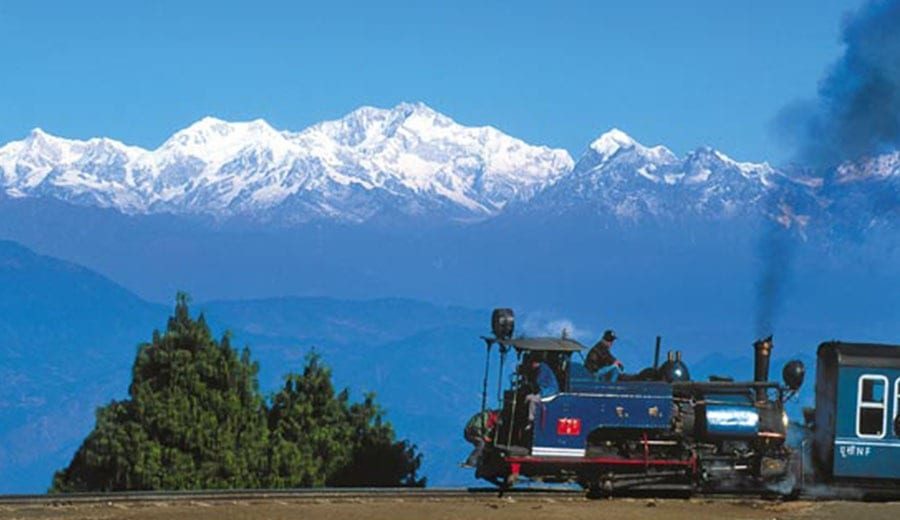
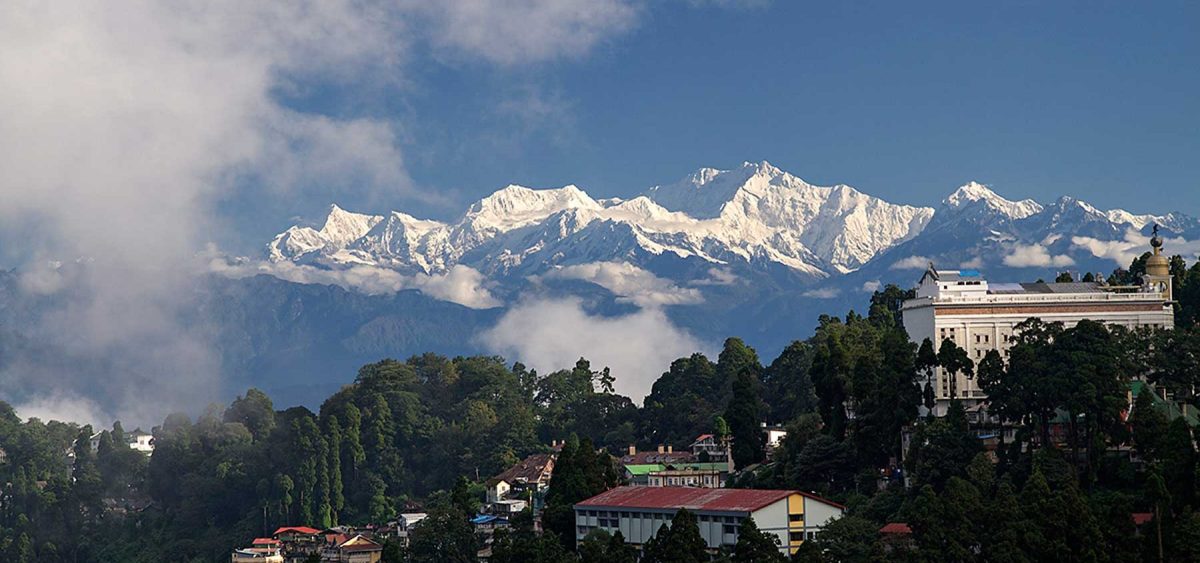
For: Pemayangtse Monastery, Khecheopalri Lake, Rabdentse ruins and the Singshore bridge. West Sikkim, and the closest thing to a Kanchenjunga balcony. No permit needed, which makes it the easiest add-on to a short trip.
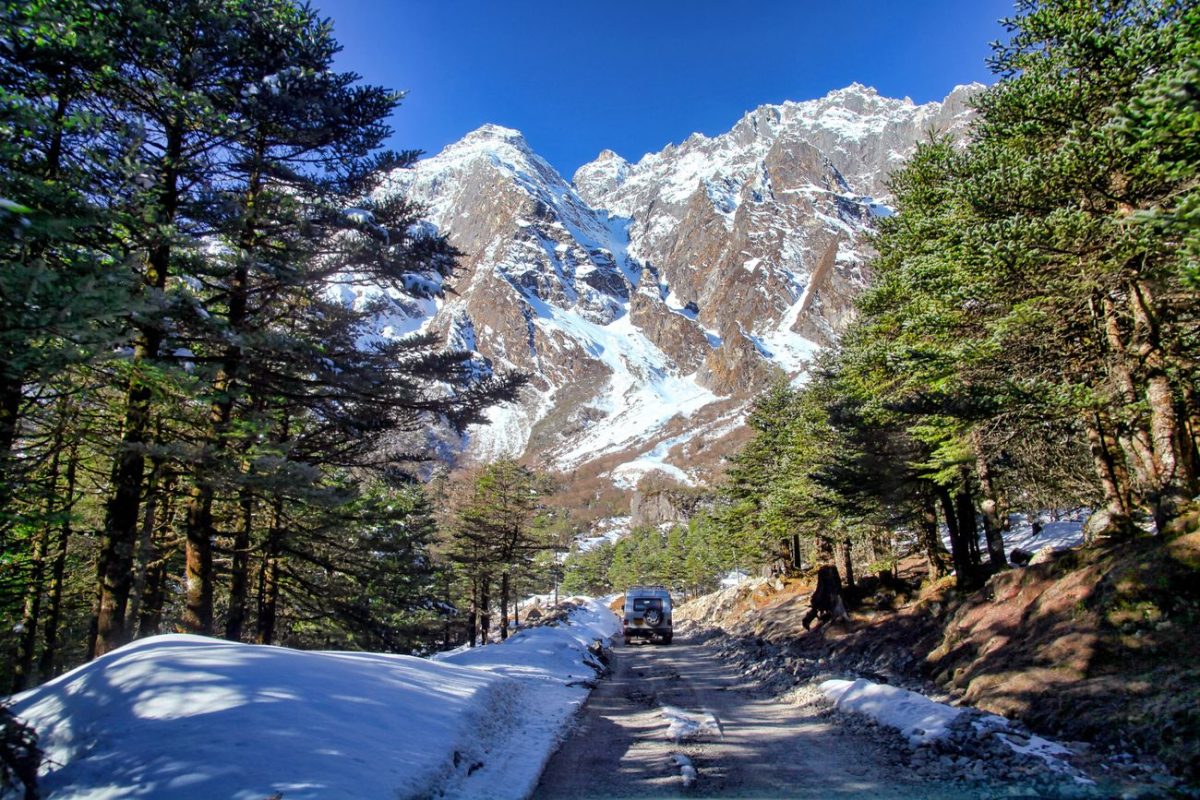
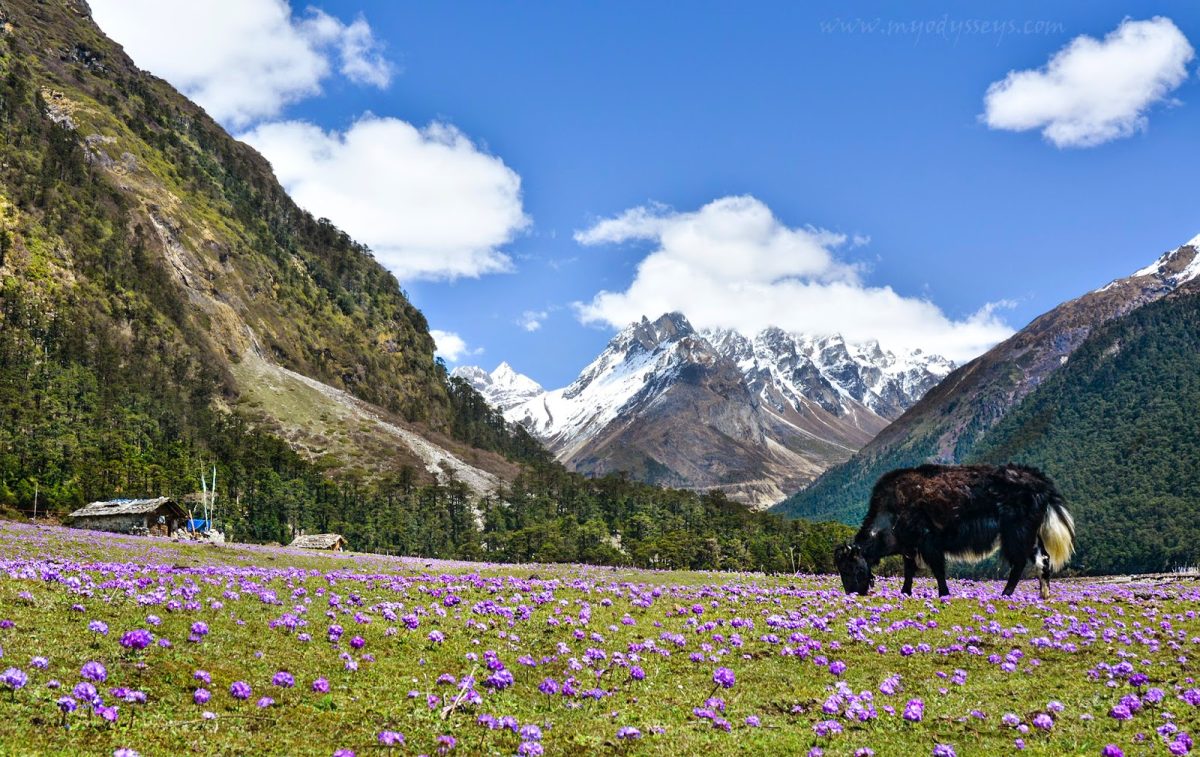
For: Yumthang Valley of Flowers and Zero Point. North Sikkim, permit-controlled and only sold through a registered operator. Rhododendrons peak late March to mid-May.
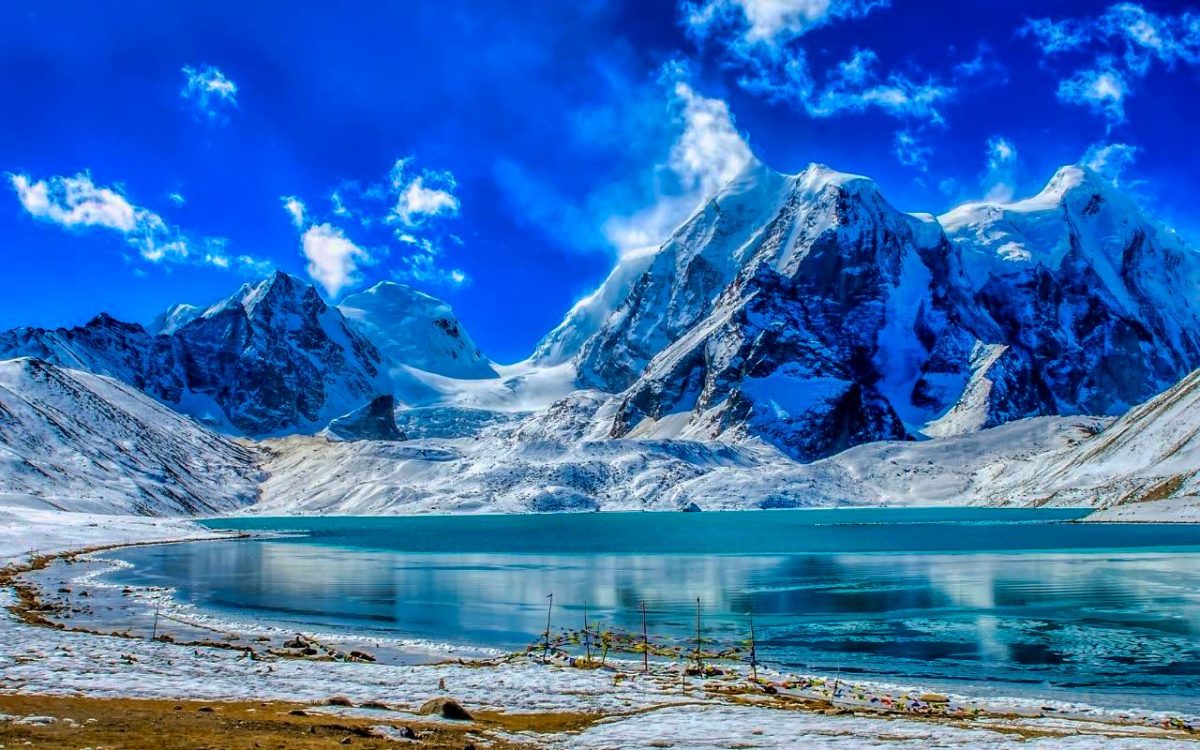
For: Gurudongmar Lake at 17,800 ft and Chopta Valley. The highest thing most itineraries attempt. Departures are pre-dawn, the lake is often closed by weather, and the altitude gain from Gangtok is close to 12,000 ft.
For: the 32 hairpin bends of the old Silk Route, Thambi View Point and Kupup Lake. East Sikkim, permit-controlled, and the one base that is still mostly homestays rather than hotels. Best for travellers who want the drive to be the point.
Two of those days are travel from Mumbai. What is left decides how far you get.
| Trip length | What it buys you |
|---|---|
| 4 days | Gangtok, Tsomgo Lake and Baba Mandir. Enough for a first look, no North Sikkim. |
| 6 days | Adds North Sikkim — Lachung and Yumthang — with an acclimatisation night in Gangtok. |
| 8 days | Adds Pelling and Kanchenjunga views, or Zuluk and the Silk Route, or Darjeeling. |
Given the travel day each way from Mumbai, we would not sell a Sikkim trip shorter than four nights on the ground — see the full Sikkim guide for what each region needs.
Yes, for parts of it. Indian nationals need an Inner Line Permit for Nathula, Tsomgo Lake and all of North Sikkim; foreign nationals need a Restricted Area Permit and cannot visit Nathula at all. Permits are issued against a confirmed tour operator and a photo ID, which is why independent travel into those areas is effectively impossible.
The thing Mumbai travellers consistently underestimate about Sikkim is that the flight is the short part. Four airlines fly Mumbai to Bagdogra non-stop, 18 times a week, and that leg is genuinely easy. What follows is a full working day on a mountain road, and it sets the shape of the whole trip. Departures from Mumbai cluster between 07:50 and 15:30, and only the early ones get you into Gangtok in daylight. Sikkim also asks for something Mumbai does not prepare you for: altitude. Gangtok sits at about 1,650 m, Tsomgo at roughly 3,750 m and Nathula higher still, and a sea-level body needs a day in Gangtok before any of that. Plan for the road and the acclimatisation and Sikkim is straightforward. Plan for the flight time alone and the first two days get wasted.
Full Sikkim guide — attractions, permits and best time to visit →
Three Mumbai dates move the price. The Maharashtra school summer break, 2 May to 18 June 2026, is the worst of them, because it lands on peak hill season and pushes May fares to the year high of about Rs 11,417 one way to start. Diwali on 8 November 2026, with schools closed 7 to 13 November, roughly doubles September fares to about Rs 10,565 and coincides with the clearest Kanchenjunga weather of the year. Ganpati works the other way: Mumbai stays home through mid-to-late September, and September is the cheapest month on the route.
Families, couples, friends groups and corporate trips ask different questions. These are the honest answers.
Gangtok at 1,650 m and Pelling at 2,150 m are comfortable for most children. The altitude question is North Sikkim: Yumthang sits at roughly 3,600 m and Gurudongmar at 5,430 m. There is no law barring children from either, but most operators — GoTravelista included — will not carry infants and toddlers to Gurudongmar, because acute mountain sickness in a child who cannot describe symptoms is not a risk worth taking six hours from a hospital.
In practice, school age and up, and only after two nights of acclimatisation. The drive leaves Lachen before dawn and climbs to 5,430 m; the return is the same day. Travellers with heart or respiratory conditions, and anyone in the first trimester of pregnancy, should skip it — that is standard high-altitude advice, not a Sikkim-specific rule.
It is one of the few Indian destinations where a couple can have snow, a monastery and a Kanchenjunga sunrise inside four days. Gangtok and Pelling carry the romantic weight; the honeymoon packages centre on those two and treat North Sikkim as optional, because a pre-dawn convoy to a frozen lake is not what most couples want from day three.
Yes, with one caveat that catches groups out: Sikkim runs on small vehicles. Roads to North and East Sikkim are restricted to Innova-class SUVs and smaller, so a group of twelve travels as three vehicles rather than one tempo traveller. Permits are issued per person against photo ID, so the whole group list has to be final before departure.
Gangtok handles offsites well — hotel conferencing, a compact sightseeing radius and reliable connectivity. North Sikkim does not: permit lead times, small vehicles and patchy mobile coverage make it a poor fit for a group on a fixed agenda. The workable shape is Gangtok as the base with Tsomgo as the one excursion.
Gangtok, Pelling and Tsomgo are all manageable at an unhurried pace, and most sightseeing is drive-up rather than walk-in. The two to flag are Nathula, where the final stretch is a flight of steps at 14,140 ft, and Gurudongmar, which we would generally advise against for anyone with cardiac or respiratory history.
From Mumbai, Kabir's pick is 6–8 days with Gangtok as the acclimatisation base before anything higher — you lose most of two days to travel, and the altitude gain from sea-level Mumbai is the part people underestimate. Shoulder season, late March to mid-May or October to early December, buys clear Kanchenjunga mornings without the peak-season road traffic.
What we would avoid: compressing this into three days from Mumbai. Two of them go to travel, which leaves one day on the ground and no margin for a road closure or a weather-shut pass.
GoTravelista works with the same Gangtok-based ground partner on every Sikkim departure. They file the Inner Line Permits against your ID before you land, hold the North Sikkim vehicle allocation, and are the number you call if a road closes.
What our Sikkim packages typically cover. The exact list for any one package is on its own page.
Prices exclude airfare from Mumbai — add the fare band above for your all-in cost.
Paced for children and parents — lower-altitude bases, shorter driving days.
Couple-first itineraries with private transfers and romantic stays.
Handpicked premium stays, private vehicles and the shorter, softer version of the drive.
Sikkim runs on small vehicles, so a large group travels as a convoy — these are costed that way.
Fixed-price transfers and sightseeing cabs, useful once you land.
Costs, routes and timings specific to travelling from Mumbai.
No, and there is no working airport in Sikkim at all. Pakyong, 31 km from Gangtok, has no scheduled commercial flights in operation or open for booking. Every Sikkim trip from Mumbai flies to Bagdogra in West Bengal and continues by road, so treat Bagdogra as the gateway.
Roughly 11 to 14 hours. The Mumbai to Bagdogra non-stop is about 2 hours 55 minutes, but add the airport transfer in Mumbai, two hours before departure, and then 4 to 5 hours on NH10 to Gangtok. It is a full day, not a morning.
Take the earliest one you can. Non-stops depart Mumbai between about 07:50 and 15:30. Only the morning departures land in time to finish the 4 to 5 hour NH10 drive before dark, and a mid-afternoon departure means arriving in Gangtok late at night on a hill road.
Not to enter Sikkim. Indian nationals do not need an Inner Line Permit, which applies to foreign nationals only. You do need a Protected Area Permit for Tsomgo Lake, Nathula, Yumthang, Gurudongmar and Zuluk, arranged in Gangtok with photo ID and passport photographs. Aadhaar and PAN are not accepted.
Meaningfully. You go from sea level to Gangtok at about 1,650 m in one day, and Tsomgo sits near 3,750 m with Nathula higher. Give yourself a full day in Gangtok before the high-altitude excursions rather than scheduling Tsomgo for the morning after you land.
Plan Rs 30,000 to Rs 60,000 per person for six to eight days. Return airfare accounts for Rs 11,000 to Rs 24,000, and the rest covers the Bagdogra transfer, permits, local vehicles and stay. The airfare band alone doubles between September and May, so the month you pick moves the total more than anything else.
Only if the journey is the point. Five direct trains run from Lokmanya Tilak Terminus or Panvel to New Jalpaiguri, and the fastest, 15659 LTT-Agartala AC Express, still takes 35 hours 30 minutes. The slowest take nearly 43 hours, and then you still have the 124 km road leg to Gangtok.
August and September, at about Rs 5,289 starting one-way, which is roughly half the November and May figures. The trade-off is real: September is still monsoon on NH10, when landslide delays between Sevoke and Rangpo are most likely, so build slack into the transfer day.
It is the best weather of the year and priced accordingly. With Diwali on 8 November 2026 and Maharashtra schools closed 7 to 13 November, Bagdogra fares go from about Rs 5,289 to Rs 10,565. If you want that week, book eight to ten weeks ahead rather than negotiating later.
Yes, and it is the sensible way to use a long travel day. Both run through Bagdogra: Darjeeling is 68 to 70 km from the airport and Gangtok is 123 to 126 km, on two different roads out of Siliguri. Combining them needs eight days rather than six.
GoTravelista does, through our long-standing Gangtok ground partner. They file the Inner Line Permit against the photo ID you send at booking, so it is issued before you land at Bagdogra rather than eating a morning of your trip. They also hold the North Sikkim vehicle allocation and are the local number you call if NH10 closes.
Six to eight days. Two of those go to travel — a flight to Bagdogra plus four to five hours on NH10 each way — so a six-day trip gives you roughly four days on the ground, which covers Gangtok, Tsomgo and one more region. Four days works only if you stay around Gangtok.
It is enough for Gangtok and Tsomgo Lake, and nothing beyond that. North Sikkim needs permit time and an acclimatisation night, so a four-day trip from Mumbai cannot reach Yumthang or Gurudongmar without cutting the drive dangerously short. We would not sell it as a North Sikkim itinerary.
Bagdogra (IXB) in West Bengal. Sikkim has no functioning commercial airport of its own — Pakyong exists but scheduled service has been limited and inconsistent, so every practical itinerary from Mumbai routes through Bagdogra and continues by road.
No. Every land-package price we publish covers hotels, private vehicle, transfers, sightseeing and applicable permits only. The Mumbai–Bagdogra return fare is separate and is the figure we add when quoting an estimated total from Mumbai.
Usually a Gangtok and Pelling itinerary rather than a North Sikkim one. Both bases sit at comfortable altitudes, the driving days are shorter, and it avoids the pre-dawn Gurudongmar run that most operators, including us, will not carry young children on.
Not in the shorter ones. North Sikkim — Lachung, Yumthang, Lachen and Gurudongmar — is permit-controlled and needs its own nights, so it appears in six-day itineraries and longer. Four-day packages stay in and around Gangtok.
Gangtok, Pelling and Tsomgo are manageable at an unhurried pace, and most sightseeing is drive-up rather than walk-in. The two to think about are Nathula, where the last stretch is steps at 14,140 ft, and Gurudongmar at 17,800 ft, which we would generally advise against for anyone with cardiac or respiratory history.
Late March to mid-May for rhododendrons and clear Kanchenjunga mornings, or October to early December for the most reliable visibility. Avoid late June to September, when NH10 is prone to landslide delays and the mountain views largely disappear.
Budget the honeymoon land package plus the Mumbai–Bagdogra return fare. Couples generally take a Gangtok and Pelling itinerary over a North Sikkim one — relaxed pacing and scenic stays rather than a 4 am convoy — which also keeps the vehicle and permit costs lower.